FedEx Peak Demand Surcharges 2026: Complete Rates, 2025 Comparison and What Shippers Should Watch
FedEx has released its 2026 holiday demand surcharges, with the first charges taking effect September 28, 2026, and continuing through January 17, 2027.
Every major comparable FedEx Peak Demand Surcharge increased compared to 2025. Among the largest percentage increases are residential Ground and Home Delivery, Ground Economy, and Overnight Express demand surcharges. FedEx has also divided Domestic Express services into two pricing groups for the first time, charging more for Overnight services than for 2Day and Express Saver shipments.
For shippers, however, the seasonal add-on is only part of the calculation. Many of these surcharges will be added to underlying accessorial charges that have also increased since last peak. The actual impact will depend on package characteristics, service mix, residential volume and the terms of each shipper’s FedEx agreement.
Key Takeaways
- Every major FedEx Peak Demand Surcharge increased for 2026.
- Overnight Express now has its own pricing structure.
- Residential Demand Charges remain volume-based and can change during peak.
- Total shipper exposure is higher because peak surcharges stack onto higher base accessorial charges.
- Contract language – not just published rates – determines actual cost.
FedEx 2026 Peak Demand Surcharge Dates
FedEx is using two slightly different schedules.
Additional Handling, Oversize and Ground Unauthorized Package demand surcharges begin September 28. Demand surcharges on Express, residential Ground and Home Delivery, and Ground Economy begin October 26.
.png)
FedEx 2026 Peak Demand Additional Handling, Oversize and Unauthorized Package Surcharges
These charges apply in addition to the corresponding published Additional Handling, Oversize or Ground Unauthorized Package charge.
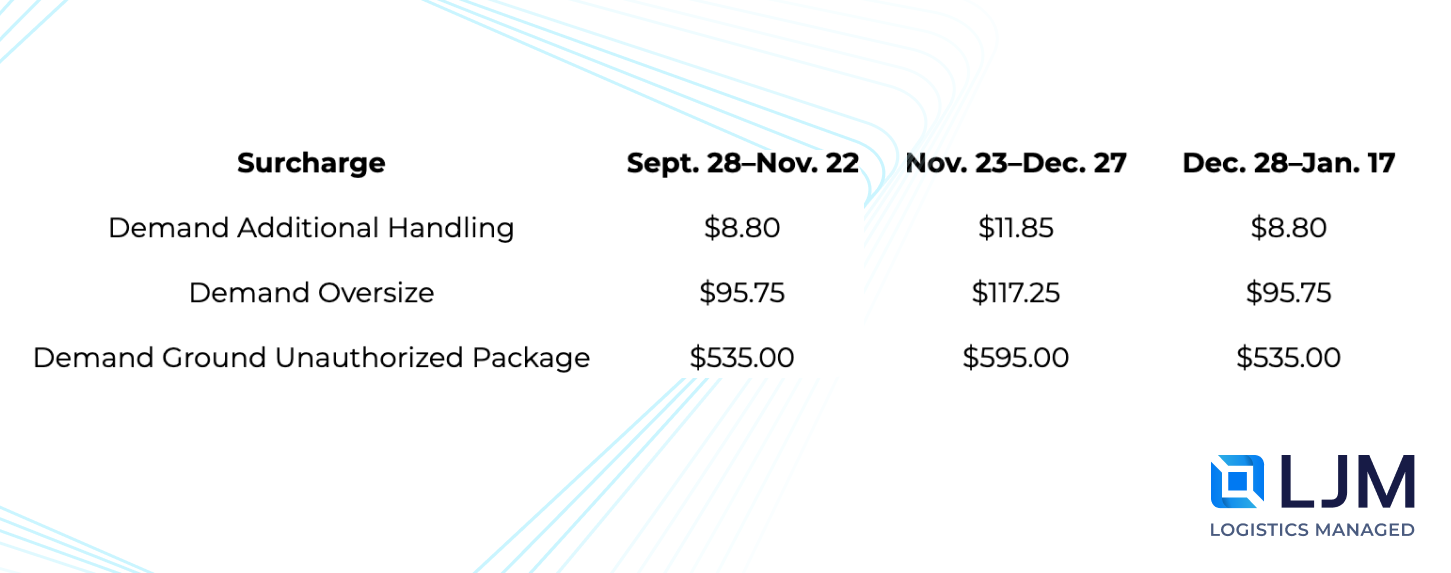
The dollar exposure can be substantial because these are not replacements for the ordinary accessorials. They are seasonal charges layered on top of them.
For example, the published 2026 Ground Unauthorized Package charge is $1,875. During the central holiday peak, the additional $595 demand charge brings the combined published charge to $2,470 for a single affected package, before considering transportation, fuel or other applicable charges.
FedEx 2026 Peak Demand Express, Residential and Ground Economy Surcharges
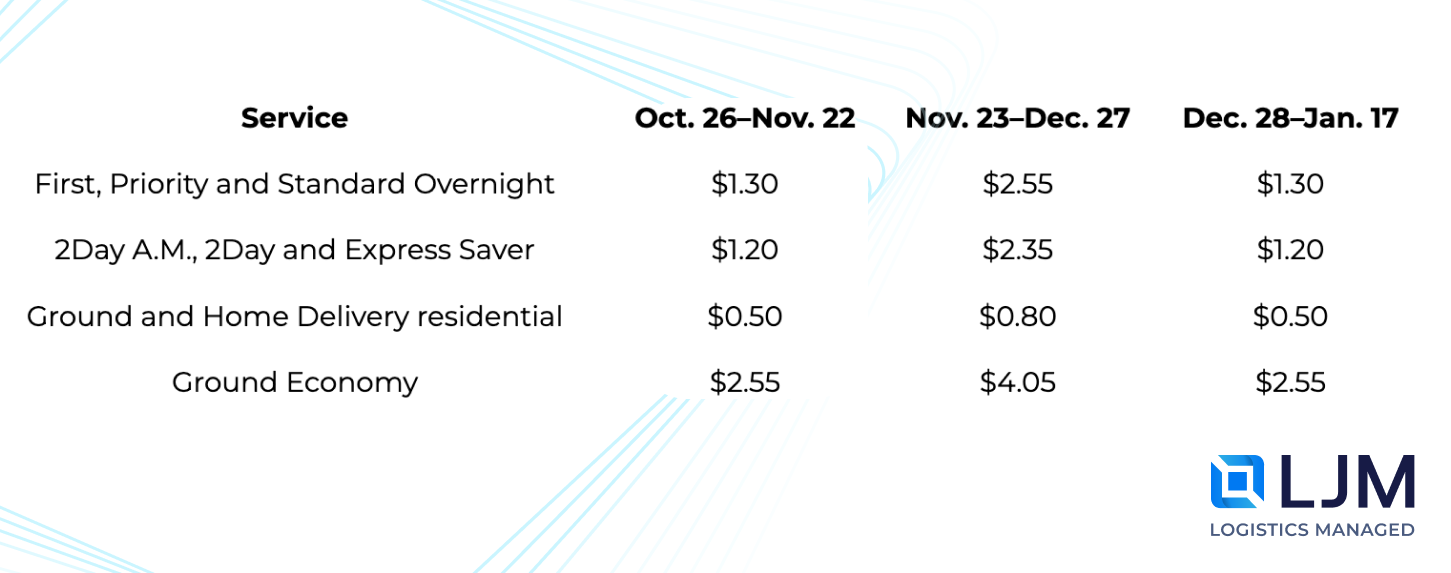
One of the most important structural changes is the division of Domestic Express into two groups.
In 2025, First Overnight, Priority Overnight, Standard Overnight, 2Day A.M., 2Day and Express Saver were all subject to the same demand surcharge. In 2026, FedEx is charging a higher amount for the three Overnight services.
The difference is only $0.20 per package during each period, but the structure matters. It suggests FedEx is becoming more granular in how it prices peak capacity according to service urgency and the demands each shipment places on the network.
Deferred Express services also increased, but by smaller percentages than Overnight services.
2026 Demand Residential Delivery Charges
FedEx also applies a separate, volume-based Demand Residential Delivery Charge to enterprise customers shipping more than 20,000 qualifying residential and Ground Economy packages during a calculation week.
The charge is based on the shipper’s weekly peaking factor, or the increase in qualifying volume relative to a June baseline. The resulting surcharge is applied after a two-week lag. It is assessed in addition to the standard Residential Delivery Charge, and any contracted discount or cap on that ordinary residential charge does not apply to the demand charge. FedEx One Rate packages are excluded from the calculation.
Ground and Home Delivery

Express services
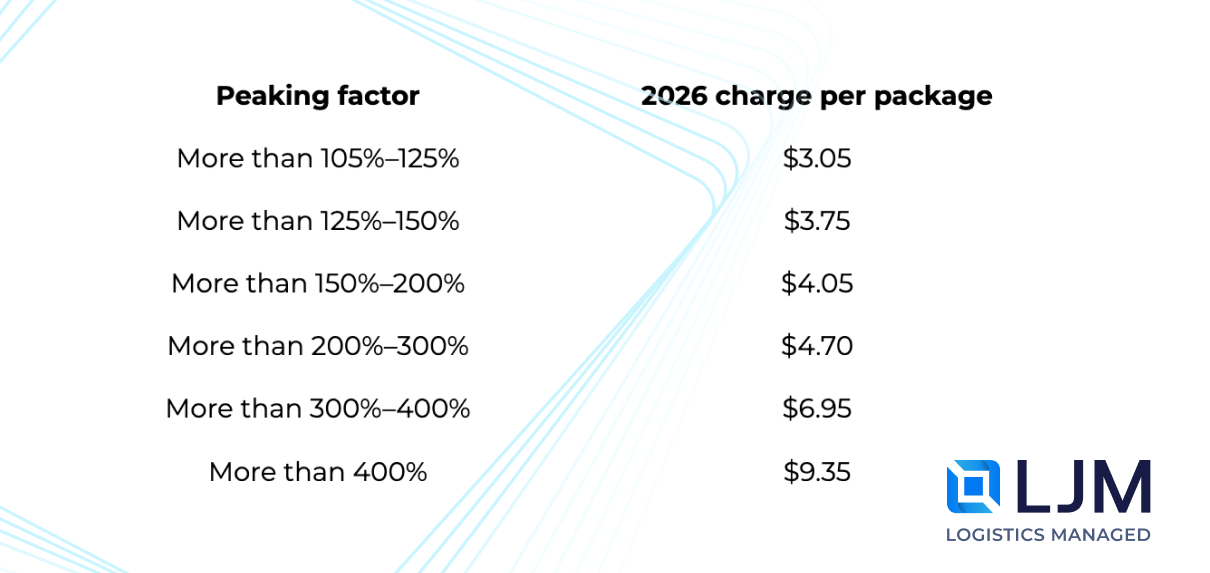
Unlike fixed peak surcharges, this fee depends on actual shipping behavior during the season. A successful promotion, product launch or stronger-than-expected holiday week can push a shipper into a higher tier. Because the charge is applied two weeks later, the cost may not appear on invoices until after the activity that triggered it.
How FedEx’s 2026 Peak Demand Surcharges Compare With 2025
FedEx increased every major comparable peak surcharge this year, compared to last year.
The largest percentage changes are concentrated in residential and lower-cost parcel services:
- The Ground and Home Delivery residential surcharge increased 25% outside the core peak, from $0.40 to $0.50, and 23.1% during the core peak, from $0.65 to $0.80.
- The Overnight Express surcharge increased 23.8% outside the core peak and 21.4% during the central holiday period.
- Ground Economy increased 15.9% outside the core peak and 14.1% during peak.
- Demand Additional Handling increased 8.7% during peak.
- Demand Oversize increased 8.1% during peak.
- The Ground Unauthorized Package demand charge increased 9.2%.
- Every tier of the dynamic Residential Delivery Charge also increased.
These percentages do not tell the whole story.
Higher peak surcharges are stacking onto higher base charges
FedEx also raised the published underlying charges for Additional Handling, Oversize and Ground Unauthorized Packages between the 2025 and 2026 holiday seasons.
LJM’s full rate model found that the combined published core-peak charge increased:
- approximately 6.3% to 7.6% for Additional Handling, depending on assessment type and zone;
- approximately 6.4% to 8.2% for Oversize, depending on zone; and
- $150 per affected package for Ground Unauthorized Packages, from $2,320 to $2,470.
For Additional Handling, the core-peak add-on also became a slightly larger percentage of the underlying charge across every category and zone in our comparison. For Oversize, the proportional peak premium remained relatively stable, but the higher base and seasonal charges still compound into a meaningful total increase.
That is why simply comparing the announced peak fee with last year’s peak fee can understate a shipper’s actual exposure.
What FedEx Shippers Should Do Before Peak Season
1. Overnight shipments now carry a higher demand premium
Shippers that rely heavily on Priority Overnight, Standard Overnight or First Overnight should model those services separately from 2Day and Express Saver. A blended “Express” forecast will obscure the new pricing difference.
This may also be an early sign of more service-specific peak pricing in future years.
2. Residential growth can change costs after the forecast is complete
The dynamic Residential Delivery Charge depends on actual weekly volume, not only the annual forecast. Marketing promotions and demand spikes can therefore change the applicable tier after peak planning is complete.
Finance, marketing, ecommerce and shipping teams need to work from the same forecast. A campaign that looks profitable based on standard parcel costs may be less attractive after the additional demand tier is applied.
3. Package characteristics may matter more than the transportation discount
A shipper can negotiate a competitive transportation rate and still absorb a large cost increase if packages repeatedly trigger Additional Handling or Oversize charges.
Review the dimensions, weight, packaging and zone distribution of affected shipments. The relevant question is not merely how much the seasonal fee increased. It is how often your shipping profile will trigger the underlying charge and its peak add-on.
4. Contract language needs to be reviewed charge by charge
Do not assume an existing residential, accessorial or transportation discount automatically applies to the corresponding demand surcharge.
Your agreement should be reviewed for:
- Demand-surcharge discounts or waivers;
- Accessorial discounts by category and zone;
- Caps and exclusions;
- service-specific language;
- Calculation thresholds and volume commitments; and
- Any provisions that affect your ability to shift volume.
The opportunities will vary considerably by contract and shipping profile.
What Shippers Should Do Now
Start with a package-level forecast that incorporates:
- Expected weekly volume;
- Service mix, including the new Overnight versus deferred Express split;
- Residential and Ground Economy volume relative to the applicable baseline;
- Packages historically assessed Additional Handling or Oversize charges;
- The zones in which those packages travel; and
- The discounts, waivers and exclusions contained in the current agreement.
Then compare that forecast against actual 2025 peak invoices. This will show whether the greatest exposure comes from rate increases, volume growth, service selection, package characteristics or gaps in the contract.
Request LJM's Complete 2025–2026 FedEx Peak Demand Surcharge Comparison
LJM has completed a detailed comparison of FedEx’s 2025 and 2026 peak demand surcharges, including the underlying published accessorial rates, peak-to-base ratios and combined year-over-year increases.
Contact LJM to request the full comparison and a custom analysis of your FedEx agreement. We will apply the rates to your specific package profile and contract terms to pinpoint potential discount, waiver and cost-reduction opportunities before peak season begins.
Frequently Asked Questions
When do FedEx’s 2026 peak season surcharges begin?
Demand surcharges for Additional Handling, Oversize and Ground Unauthorized Packages begin September 28, 2026. Express, residential Ground and Home Delivery, and Ground Economy demand surcharges begin October 26. The highest rates apply from November 23 through December 27, and the final post-peak period ends January 17, 2027.
Are FedEx’s 2026 peak surcharges higher than in 2025?
Yes. Every major comparable demand surcharge increased. The largest percentage increases apply to residential Ground and Home Delivery, Overnight Express, and Ground Economy shipments.
What is the highest FedEx peak demand surcharge in 2026?
The Demand Ground Unauthorized Package Charge reaches $595 per package during the core holiday peak. When combined with the published $1,875 base charge, the total published charge reaches as much as $2,470 before transportation, fuel and other applicable charges.
Can FedEx peak surcharges be negotiated?
Discounts and waivers may be available depending on the shipper’s agreement, volume, service mix and negotiating leverage. They are not automatic. FedEx explicitly states that contracted discounts or caps on its standard Residential Delivery Charge do not apply to the separate volume-based Demand Residential Delivery Charge.
Access This Content
Change the Economics of Your Shipping
Better Rates.
Complete Visibility.
Strategic Edge.


