UPS 2027 General Rate Increase: Why the 5.9% Headline Is Only the Starting Point
UPS has announced that its published Daily Rates for UPS Ground, Air and International services will increase an average net 5.9% effective December 21, 2026.
It is the same headline increase UPS implemented for 2026. It is also an average, not a uniform increase or a reliable forecast of what any individual company will pay.
A shipper’s actual 2027 increase will depend on its services, zones, billed weights, package characteristics, origin and destination ZIP codes, accessorial exposure and contract terms. Several related changes taking effect with the GRI could further alter that result, including a higher minimum billable weight for Additional Handling packages, revised zone and Area Surcharge ZIP-code lists and a new domestic Surge Fee framework.
UPS has not yet released its detailed 2027 rate previews. Exact service-level and surcharge comparisons will require further analysis once those detailed rates become available. However, the information published so far already identifies several areas shippers should begin modeling.
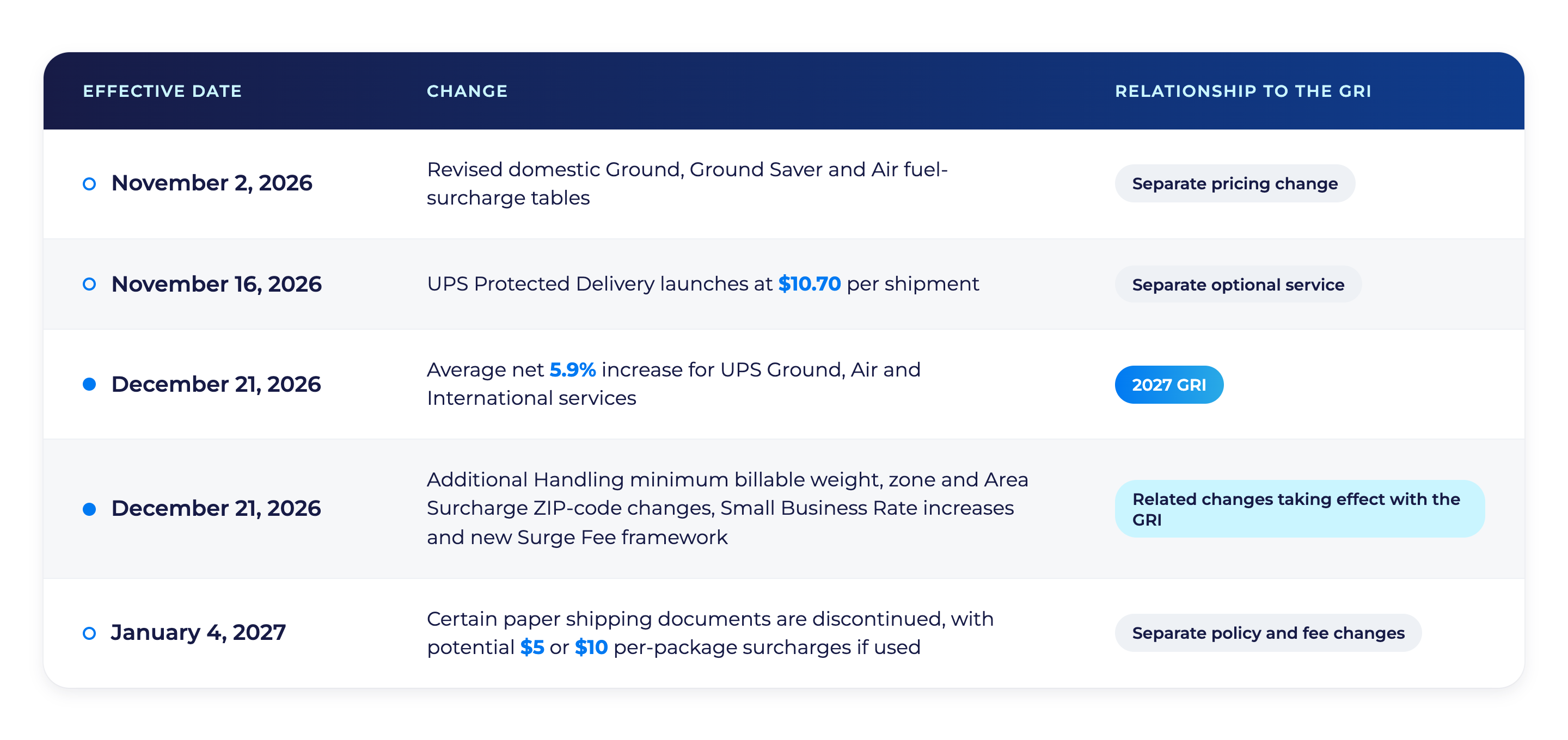
UPS 2027 Pricing Timeline
What Does a 5.9% Average Net Increase Mean?
The 5.9% figure describes the average net increase across a broad set of published UPS rates. It does not mean every transportation rate, service, zone, weight or surcharge will increase by 5.9%.
A company concentrated in Ground shipments may experience a different increase than one using a significant amount of Air or international service. A lightweight residential shipper will have a different cost profile than a company shipping large, irregular or heavy packages. Changes to minimum charges can also reduce the value of negotiated transportation discounts.
Contract protections further separate the published increase from the amount that reaches the invoice. Transportation discounts may not apply to accessorial charges. Surcharge discounts, caps, waivers and exclusions may protect some charges while leaving others fully exposed.
That is why multiplying current annual UPS spending by 1.059 will not produce a dependable 2027 budget.
The appropriate calculation begins with actual shipment-level data and applies the new rates, rules and contract provisions to each package. The resulting gross increase can then be compared with the net increase after applicable protections.
The Additional Handling Minimum Billable Weight Will Rise to 50 Pounds
Effective December 21, UPS will increase the minimum billable weight for Additional Handling packages from 40 to 50 pounds.
This change is separate from the Additional Handling surcharge itself. A qualifying package may be subject to both the Additional Handling charge and transportation pricing based on a minimum billable weight of 50 pounds.
For packages that would otherwise have a lower billed weight, the change can increase the transportation component of the shipment cost before the Additional Handling charge, fuel surcharge and any applicable demand surcharge are added.
The greatest exposure may sit with companies shipping lightweight but bulky, irregular or nonstandard packages. Shippers should identify packages that currently incur Additional Handling while being billed below 50 pounds and model the ten-pound change against their actual service and zone mix.
Zone and Area Surcharge ZIP-Code Changes Can Alter Costs in Two Ways
UPS will update both the ZIP codes aligned with certain shipping zones and the ZIP codes subject to Area Surcharges.
These are distinct changes.
A zone reassignment can change the underlying transportation rate for a shipment even when the origin, destination, service and package remain unchanged. An Area Surcharge list change can alter whether a shipment receives an additional charge.
A destination ZIP code could therefore affect 2027 costs through:
- A different transportation zone.
- A newly applicable or revised Area Surcharge.
Companies should compare the new ZIP-code files with their actual origin and destination data as soon as UPS publishes the updated lists. Looking only at last year’s Area Surcharge spending may miss locations that become newly subject to a charge in 2027.
UPS Is Adding a New Domestic Surge Fee Framework
Effective on or after December 21, domestic UPS Ground and Ground Saver shipments originating from certain ZIP codes will become subject to an additional per-package Surge Fee for qualified customers.
UPS has said that the fee amounts and applicable origin ZIP codes will be released in early November.
The origin-based structure deserves close attention. Most parcel-cost analysis emphasizes destination zones and delivery-area exposure. This fee may create an additional cost based on where a shipment enters the UPS network.
Shippers with multiple fulfillment centers, stores or distribution points should determine whether any affected origin ZIP codes carry a disproportionate share of their volume. Once the full details are available, the analysis should also establish:
- Which accounts UPS considers qualified
- Which origin ZIP codes are included
- The services and packages subject to the fee
- Whether the fee is subject to fuel
- Whether current contract discounts or waivers provide any protection
- Whether alternate fulfillment or carrier-routing options are economically viable
Until UPS publishes the complete schedule, companies should reserve a separate line in their 2027 models rather than assuming the 5.9% GRI captures this exposure.
The GRI Will Begin Before the Highest Peak Rates End
UPS’s 2027 GRI takes effect on December 21, but the carrier’s highest 2026 demand surcharges remain in place through December 26.
For six days, qualifying shipments can be assessed using the new 2027 transportation rates while the highest peak-season demand charges are still active.
During that window, UPS’s additional peak charges reach:
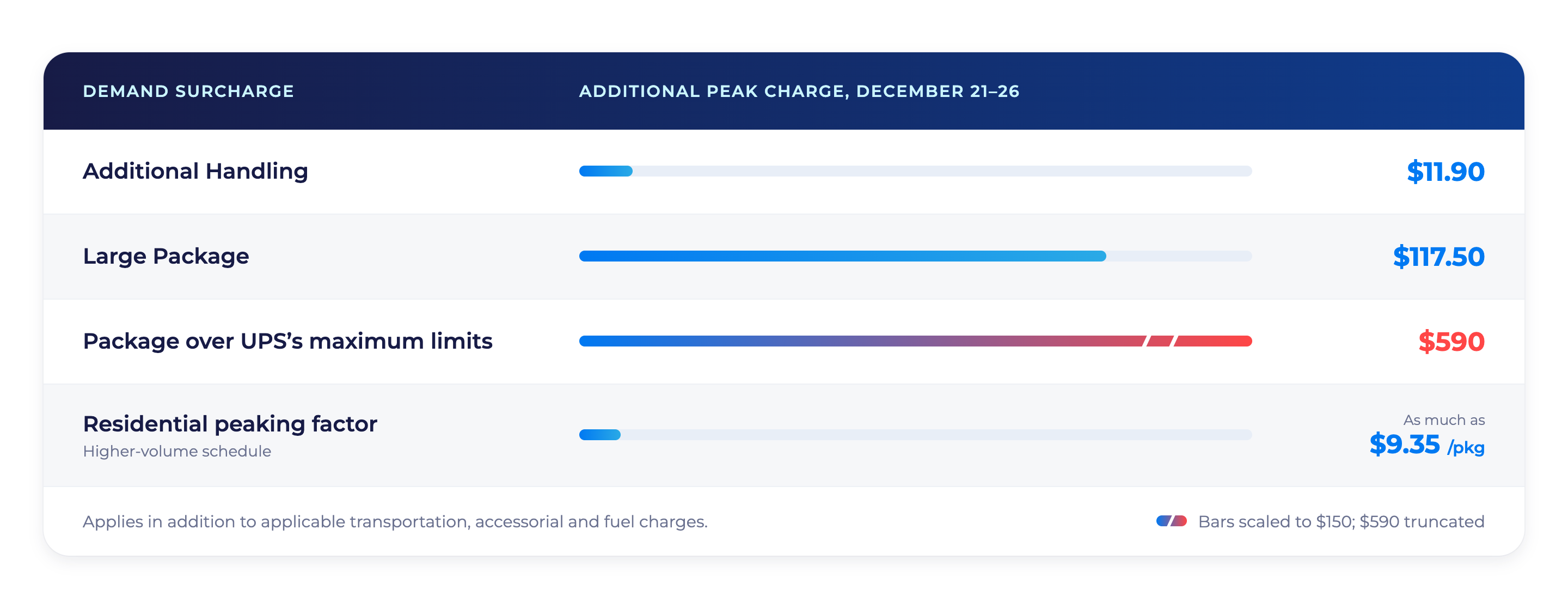
These demand surcharges apply in addition to applicable transportation, accessorial and fuel charges.
Companies that ship meaningful post-holiday, expedited, return or replenishment volume should model December 21 through December 26 separately. Applying one blended rate to the entire month could obscure the combined effect of the GRI and peak pricing.
The November Fuel-Surcharge Change Is Separate from the GRI
Effective November 2, UPS will revise its U.S. Ground, Ground Saver and Domestic Air fuel-surcharge tables.
Domestic Air fuel-surcharge percentages increase by 0.50 percentage points at comparable fuel-price bands. Ground and Ground Saver increases are generally 0.50 percentage points at the higher listed bands, but UPS has also restructured certain lower fuel-price thresholds. That restructuring can produce larger changes in some ranges.
Fuel surcharges are adjusted weekly and apply to transportation charges and certain accessorials, value-added charges and other fees. The financial effect can therefore extend beyond the base transportation rate.
This is not part of the December 21 GRI. It is an earlier pricing change that can increase costs before the new annual rates take effect.
Review UPS’s new domestic fuel-surcharge tables.
Other UPS Changes Taking Effect
Two additional updates should be included in 2027 shipping policies and budgets, although neither is part of the GRI.
Beginning November 16, UPS will offer UPS Protected Delivery for $10.70 per shipment. The service requires the recipient to provide a secure PIN before the shipment is released.
Beginning January 4, 2027, UPS 3 Day Select Shipping Documents and UPS Ground Shipping Documents will be discontinued. UPS 3 Day Select and Ground shipments tendered using a discontinued Ground Shipping Document may incur a $10-per-package surcharge. Air Shipping Documents will also be discontinued, with a potential $5-per-package surcharge if used.
UPS is not discontinuing UPS 3 Day Select service. The January change applies to the paper shipping-document option.
Companies still using these documents should update their shipping systems and operating procedures before January 4.
How Shippers Should Build Their 2027 UPS Budgets
A useful 2027 budget should begin with a historical re-rating of actual packages rather than a percentage applied to total spending.
That analysis should measure:
- The gross increase under the new published rates
- The net increase after contractual discounts, caps, waivers and exclusions
- Transportation changes by service, zone and billed weight
- Additional Handling packages affected by the new 50-pound minimum
- Exposure created by revised zone and Area Surcharge ZIP-code lists
- Shipments originating from ZIP codes included in the new Surge Fee framework
- The separate impact of the November fuel-surcharge tables
- The overlap between the December 21 GRI and the highest peak rates
- The effect of minimum charges on the value of negotiated discounts
- The customers, products and fulfillment locations driving the greatest increase
The analysis should also separate carrier-driven inflation from changes in shipment volume, service mix, zone mix and package characteristics. Otherwise, a company may mistake business growth or an operational change for the GRI, or overlook a carrier increase hidden inside a changing shipping profile.
What Shippers Can Do Before December 21
UPS has not yet published every detail required for a complete 2027 model, but shippers do not need to wait to begin preparing.
Companies can identify Additional Handling packages billed below 50 pounds, map shipment volume by origin and destination ZIP code, review their UPS agreements for surcharge protections and preserve a clean shipment-level baseline for re-rating.
Once the detailed rate and ZIP-code files are available, shippers should quantify the largest sources of exposure and prioritize targeted responses. Those actions may include packaging changes, service substitutions, routing adjustments, fulfillment changes and requests for specific carrier concessions.
The right strategy will depend on where the increase sits. A shipper affected primarily by Additional Handling needs a different response than one whose exposure is driven by zone changes, minimum charges or the new origin-based Surge Fee.
UPS’s 5.9% announcement is therefore a starting point, not a 2027 budget.
LJM can apply the complete 2027 UPS rates, surcharges and rules to your actual shipment data and carrier agreement. The resulting analysis identifies your projected increase, the packages driving it and the operational or contractual actions that may reduce the impact.
Request a complimentary contract and usage analysis or schedule a consultation with LJM.
Review UPS’s official 2027 rate information.
Access This Content
Change the Economics of Your Shipping
Better Rates.
Complete Visibility.
Strategic Edge.


