UPS Revises International Surge Fees as FedEx Adds New Fees for 2026 Peak Season
International shippers now have additional carrier fees to incorporate into their 2026 peak-season planning. UPS and FedEx have each announced international demand or surge fee changes, with different effective dates, structures and shipment criteria.
The announcements reinforce an important shift: peak season is no longer one uniform holiday pricing window. Shippers must track multiple schedules based on carrier, service, lane and package characteristics.
FedEx International Demand Surcharges Begin September 21
From September 21, 2026 through February 7, 2027, FedEx will apply additional Demand Surcharges to U.S. International Package Services that trigger the corresponding non-standard-package charge:
- Additional Handling: $8.80
- Oversize: $95.75
- Unauthorized package: $200.00
FedEx International Ground is excluded from these September 21 international non-standard shipment fees; however, it is subject to separate FedEx Demand charges for certain non-standard packages beginning September 28.
These fees begin before FedEx’s domestic peak charges and remain in effect several weeks after the domestic peak period ends. FedEx has also indicated that it will adjust its broader U.S. international Demand Surcharge throughout the holiday season, with additional details expected in early September.
September 4 Update: FedEx Publishes Detailed International Demand Surcharges
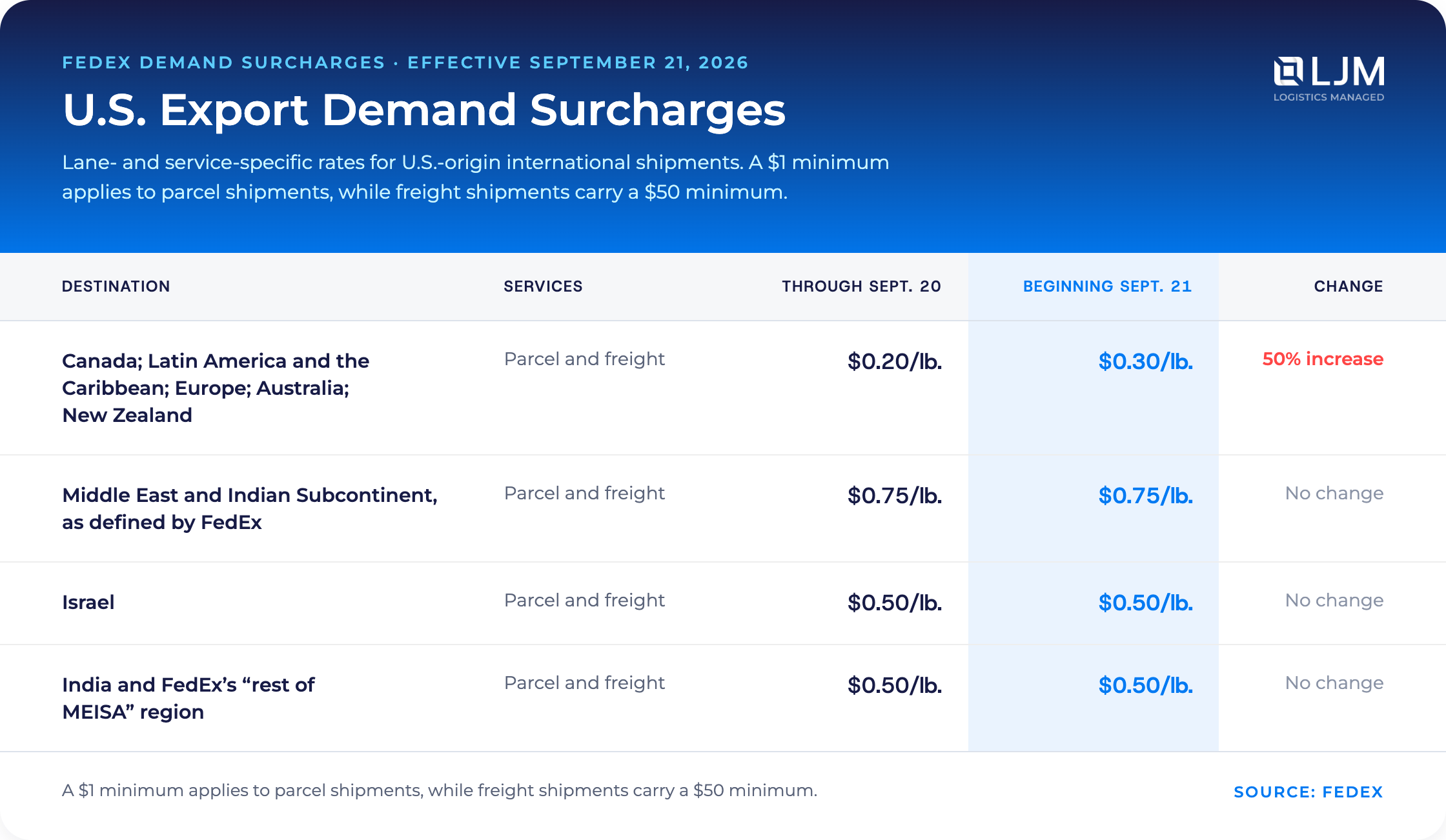
FedEx has released the detailed U.S. international Demand Surcharge tables it previously said would be available in early September. The new lane- and service-specific rates take effect September 21, 2026.
U.S. Export Demand Surcharges
U.S. Import Demand Surcharges
FedEx also introduced a broader lane-by-lane structure for U.S. imports:
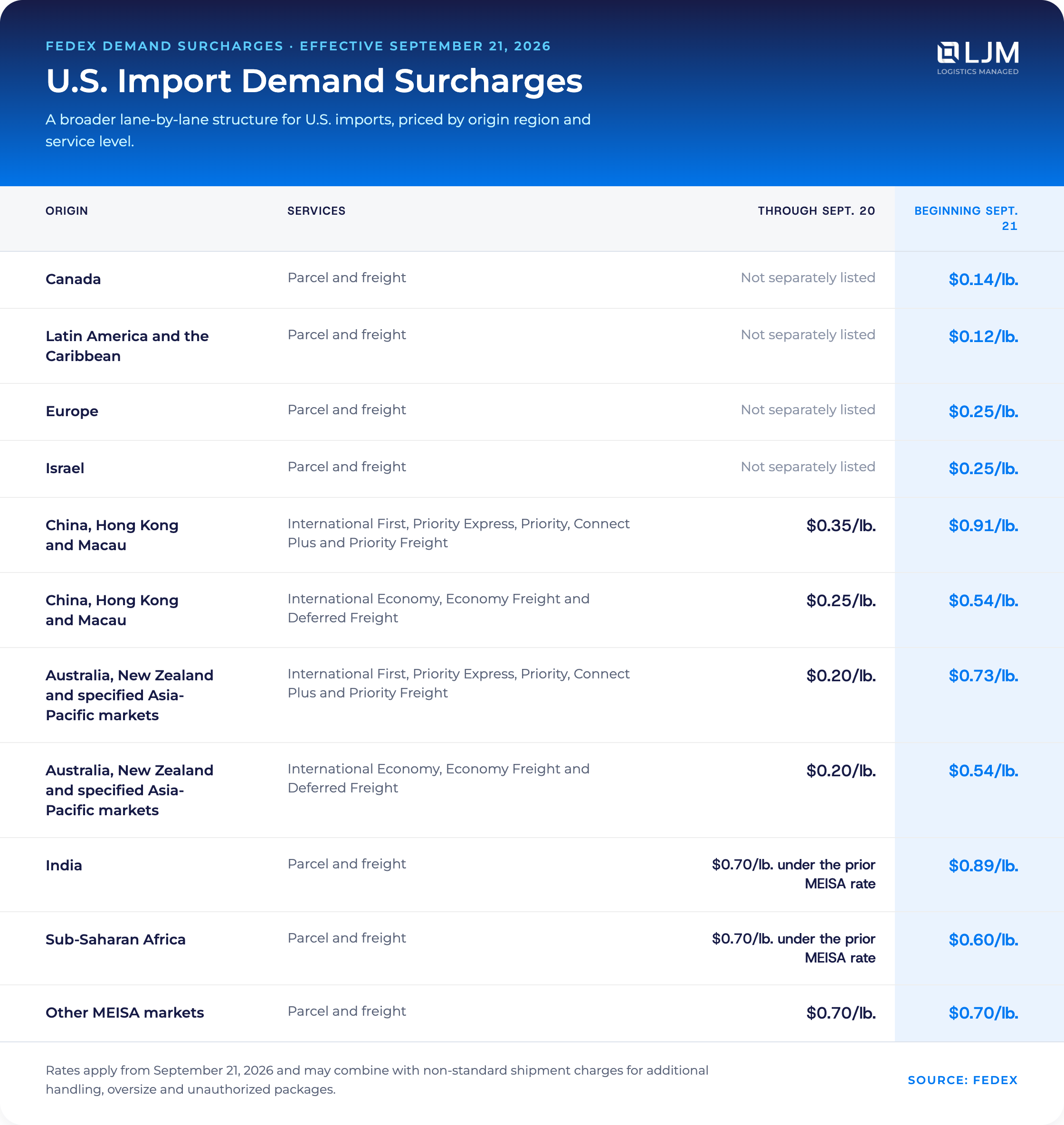
The changes are particularly significant for imports from China, Hong Kong and Macau. Priority-service charges increase from $0.35 to $0.91 per pound, while economy and deferred services increase from $0.25 to $0.54 per pound. Priority-service imports from Australia and the specified Asia-Pacific markets increase from $0.20 to $0.73 per pound.
The previously announced international non-standard shipment fees remain unchanged:
- Additional Handling: $8.80 per package
- Oversize: $95.75 per package
- Unauthorized package: $200 per package
Those fees apply from September 21, 2026 through February 7, 2027 and exclude FedEx International Ground. Unlike the lane-specific rates published September 4, the non-standard shipment fees were originally announced August 18.
Shippers should now incorporate the final export and import tables into their peak-season models, accounting for origin, destination, service, billable weight and any overlapping non-standard shipment charges.
Review FedEx’s official U.S. export Demand Surcharge table and U.S. import Demand Surcharge table.
UPS Revises International Surge Fees Beginning September 27
For U.S.-origin international shipments using specified UPS Worldwide, Standard and Worldwide Economy services, UPS will apply the following Surge Emergency Fees in addition to the applicable underlying accessorial charges:
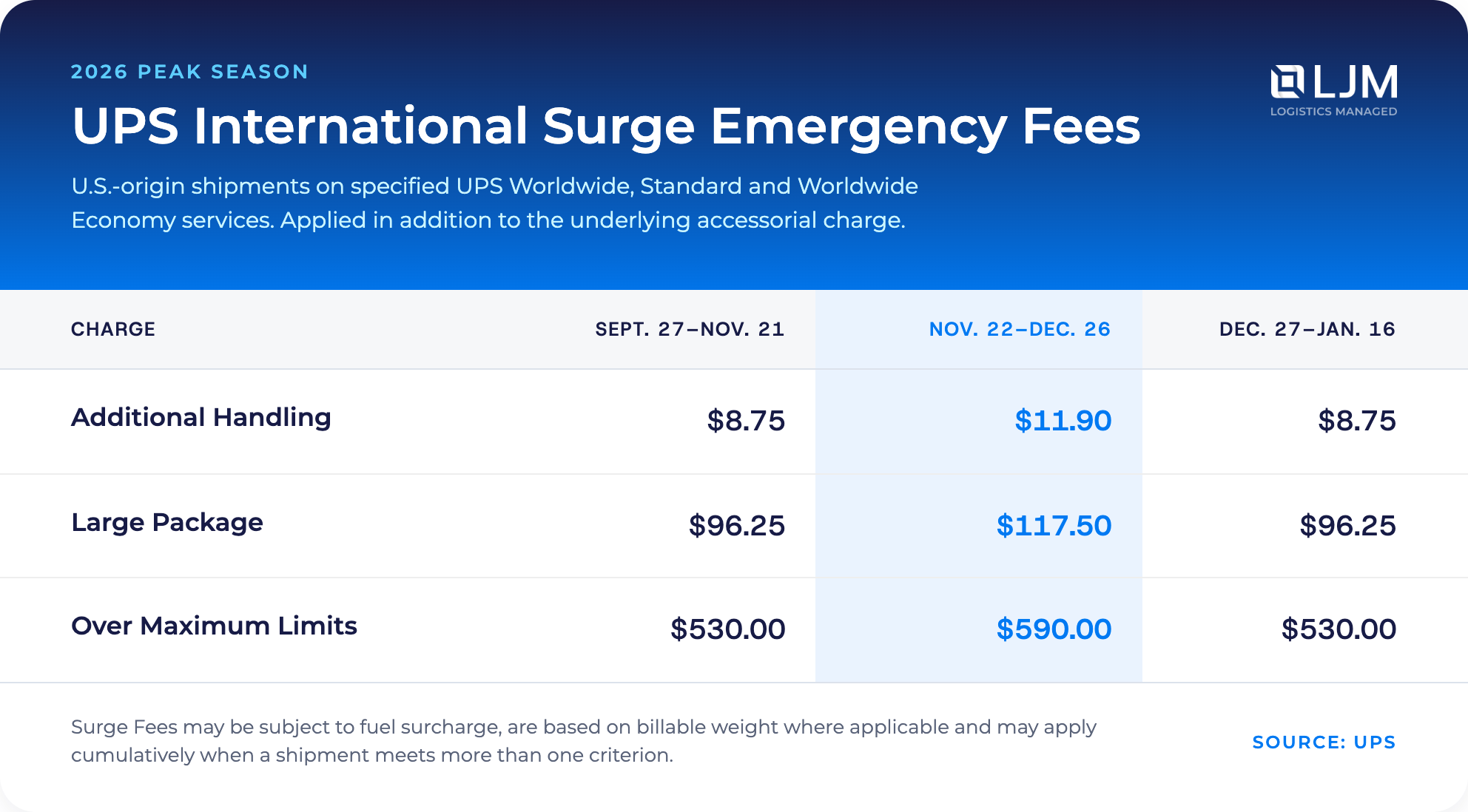
UPS is also introducing a $0.50-per-package fee for UPS Standard shipments between the U.S. and Canada or Mexico in either direction. U.S.-origin UPS Worldwide Economy DDP and DDU shipments will be subject to a $0.50-per-pound fee. These charges apply from September 27, 2026 through January 16, 2027.
UPS also maintains several international lane-based fees that remain effective until further notice. UPS states that Surge Fees may be subject to fuel surcharge, are based on billable weight where applicable and may apply cumulatively when a shipment meets more than one criterion.
What International Shippers Should Do Now
Shippers should segment historical international volume by origin, destination, direction, service, billable weight and package characteristics. Packages that repeatedly trigger Additional Handling, Oversize, Large Package or Over Maximum charges require particular attention.
The cost model should also account for overlapping fees rather than evaluating each charge independently. With FedEx expected to release additional details on its broader U.S. international Demand Surcharge in early September, shippers should incorporate those updates into their peak-season models as they become available.
Access This Content
Change the Economics of Your Shipping
Better Rates.
Complete Visibility.
Strategic Edge.


