USPS 2027 GRI: What the 5.9% Rate Increase and Permanent 11% Fuel Surcharge Mean for Shippers
USPS has announced proposed 2027 shipping price changes that extend well beyond its headline general rate increase.
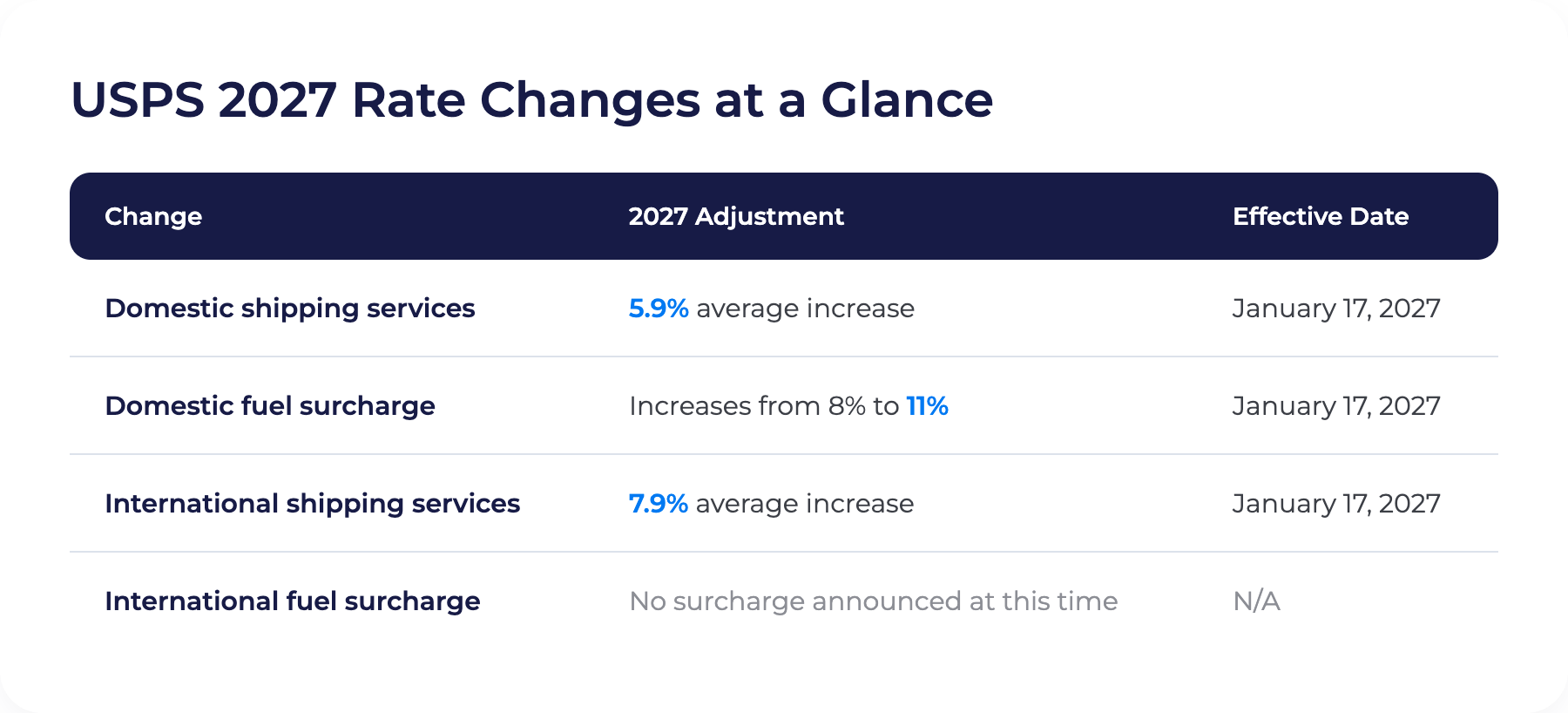
Effective January 17, 2027, USPS plans to increase domestic shipping prices by an average of 5.9%. It will also convert its existing temporary 8% transportation-related price adjustment into a permanent 11% fuel surcharge.
For parcel shippers, the central takeaway is simple: the 5.9% headline does not describe the full potential cost increase.
USPS also plans to adjust certain competitive special services and introduce new fees, creating additional cost considerations beyond the published rate increases.
The domestic increase applies across Priority Mail Express, Priority Mail, USPS Ground Advantage and Parcel Select.
The international increase covers Priority Mail Express International, Priority Mail International, First-Class Package International Service and International Priority Airmail.
The changes remain subject to Postal Regulatory Commission review.
The “Temporary” USPS Adjustment Is Now Permanent
USPS implemented a temporary 8% transportation-related increase to base postage prices in April 2026. Under the new proposal, USPS will convert that adjustment into a permanent fuel surcharge and add another three percentage points, bringing the total to 11%.
USPS says it will reevaluate the surcharge in July 2027 based on fuel prices during the first half of the year.
That structure differs from the weekly, index-based fuel tables used by UPS and FedEx. USPS has not announced a weekly adjustment mechanism. Instead, it is establishing an 11% surcharge and scheduling a later review.
The policy still creates a new source of pricing uncertainty. Once a fuel surcharge becomes a permanent component of the rate structure, shippers must model it alongside published transportation rates, service changes and other fees.
Why the 5.9% Headline Is Only a Starting Point
A carrier’s average rate increase is not the same as an individual shipper’s cost increase.
The actual impact will depend on:
- The USPS services used
- Package weights and dimensions
- Shipping zones
- Commercial pricing and negotiated arrangements
- The share of volume subject to the fuel surcharge
- Changes to special services and ancillary fees
- How volume is divided among USPS, UPS, FedEx and other carriers
Shippers should also avoid simply adding 5.9% and 11% and describing the result as a 16.9% increase. The existing 8% adjustment is already reflected in current postage prices, and the proposed 11% surcharge represents a change in both the level and structure of that adjustment. A defensible forecast must compare current all-in shipment costs with the proposed 2027 pricing at the package level.
What Parcel Shippers Should Analyze Now
1. Re-rate historical shipments
Apply the proposed 2027 USPS rates and 11% surcharge to a representative period of actual shipments. This establishes a more accurate cost baseline than the published average.
2. Segment the impact by service, weight and zone
A 5.9% average can conceal much larger changes within individual shipment categories. Identify the services and package profiles producing the greatest dollar impact.
3. Revisit lightweight residential routing
USPS often plays an important role in lightweight residential delivery. Compare its new all-in economics with UPS, FedEx and relevant alternative carriers before changing routing rules.
4. Model the effect on multi-carrier thresholds
Moving volume between carriers can affect earned discounts, minimum commitments and other contract economics. Calculate the net result before shifting shipments.
5. Monitor the July fuel review
The January surcharge may not be the final USPS fuel adjustment of 2027. Build another review into the second-half budget cycle.
USPS Is Becoming a More Complex Cost Variable
USPS may remain the most economical option for certain parcel profiles. The 2027 announcement does not change that automatically.
It does mean that shippers need to evaluate USPS with the same financial rigor applied to commercial carriers. Published rates, fuel treatment, shipment characteristics and routing decisions must be analyzed together.
Clarity starts with an accurate baseline. Confidence comes from modeling the available options before changing the network. Control requires monitoring what actually happens after new rates take effect. The objective is measurable cost improvement, not simply a lower published rate.
LJM can apply the proposed USPS changes, along with the latest UPS and FedEx pricing, to your actual parcel history and identify where your 2027 costs are most exposed.
REQUEST A FREE 2027 PARCEL COST ANALYSIS
Access This Content
Change the Economics of Your Shipping
Better Rates.
Complete Visibility.
Strategic Edge.

"Parcel Intelligence" and "Parcel Intelligence Platform" are registered trademarks of LJM Supplies Corp.
© 2026 LJM Supplies Corp.
All Rights Reserved.


